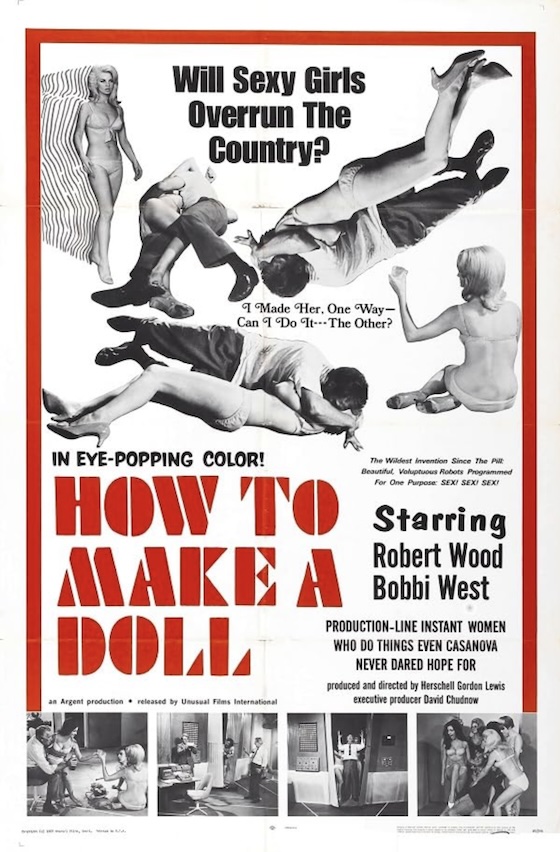
How to Make a Doll sits in a strange little corner of Herschell Gordon Lewis’ filmography—less splatter, more smirk. You come in braced for the arterial fireworks of Blood Feast or the garish stage-show brutality of The Wizard of Gore. You don’t get that. The film slips sideways instead. Quieter. Stranger. A little melancholy, if you let it linger.
And yes—dolls.
They don’t chase. They don’t lunge. They wait. That’s worse. The eyes catch first: glassy, fixed, reflecting just enough light to feel aware. Not quite looking at you. Past you. As if they’re filing something away. Then the face follows, almost right but not right enough. A smile that stretches a hair too far—or gives up too early, like it lost interest halfway through the expression. Skin that should yield but doesn’t. Porcelain. Plastic. Something pretending to be warm and missing the mark by inches.
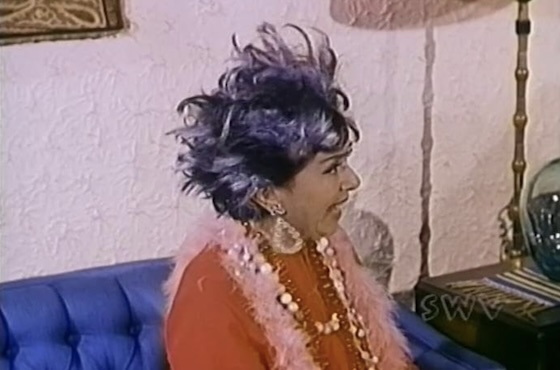
Robert Wood leads, with Marlene Deem, Darlene Bennett, and Byron Mabe circling around him, and the whole thing feels… tilted. Not broken. Not dull. Just off-center, like a painting hung a degree too crooked and nobody fixes it.
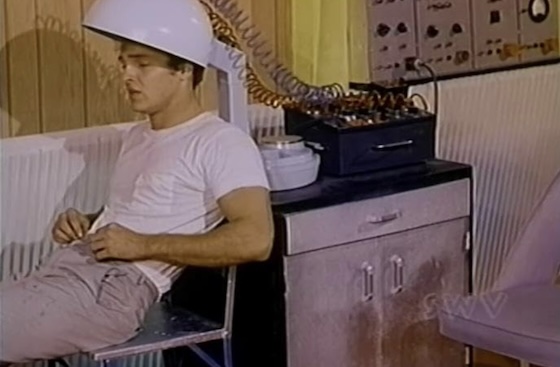
This is Lewis with the volume dial turned down. No grand guignol excess. No operatic gore. Just a shy man dissolving into his own workaround for human contact—he builds it instead. Dolls as companions. Dolls as systems of control. It plays like a joke told under the breath. You hear it. You’re not sure you’re supposed to laugh. The punchline sours before it lands.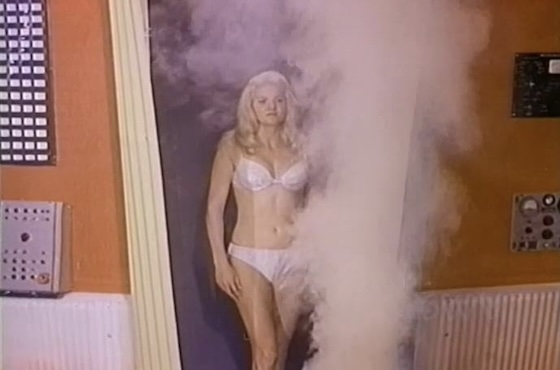
The tone drifts. It doesn’t march. Scenes wander in, hesitate, leave late. Dialogue circles itself, distracted, like someone talking while watching something over your shoulder. And still—something honest flickers in that awkwardness. Not polished. Not tidy. But familiar. Loneliness dressed up as a project. That sticks.
You wait for a turn. A snap into thriller, into satire, into anything with edges. It never quite comes. The film floats instead. Pauses. Shrugs. Smiles faintly at its own oddness. The humor is dry enough to miss if you blink.
And the dolls—this could have tipped into nightmare territory. It doesn’t. That restraint becomes the unease. It feels plausible. Not a mad scientist. Just a guy you wouldn’t notice until you did.
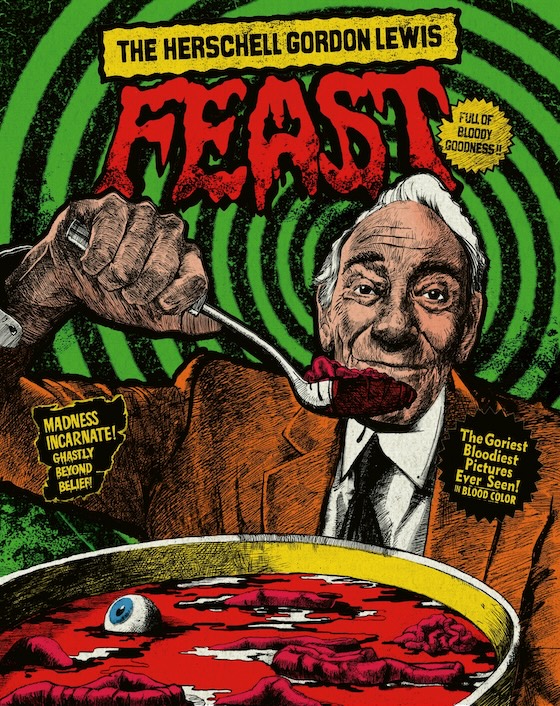
So it sits there. An odd artifact. Not essential Lewis. Not accidental, either. A small, soft-spoken experiment living in the shadow of louder films, arriving on Disc Six of Arrow’s The Herschell Gordon Lewis Feast release like an afterthought that refuses to leave. You finish it, unsure. Then it follows you anyway.


Home Video Distributor: Arrow Films
Available on Blu-ray - November 10, 2020
Screen Formats: 1.85:1
Subtitles: English
Video: 1080p
Audio: LPCM Mono
Discs: Blu-ray Disc; seven-disc-set
Region Encoding: Locked to Region A
When Arrow resurrected the Herschell Gordon Lewis Feast Blu‑ray box set, it wasn’t just a re‑release — it was a full‑scale archaeological dig conducted by maniacs who love cinema too much to let its weirdest artifacts rot in the swamp. This set arrives like a grindhouse holy text, a lavish, oversized altar to the Godfather of Gore, packed with restorations so crisp you can practically count the brushstrokes on the latex intestines. Arrow treats Scum of the Earth and its deranged siblings with the reverence usually reserved for Bergman or Kurosawa, which is exactly the kind of cosmic joke H.G. Lewis would appreciate. The packaging is a riot of lurid artwork, the extras are deep‑cut academic fever dreams, and the whole thing feels like a lovingly curated museum exhibit dedicated to the moment American cinema shrugged off good taste and said, “Let’s see what happens if we show EVERYTHING.” It’s not just a box set — it’s a blood‑drenched celebration of outsider filmmaking at its most gloriously unhinged.
Video
The Arrow Video release of How To Make A Doll significantly improves the film’s presentation compared to older DVD versions by using a new high-definition restoration sourced from the best available film elements.
While the movie itself remains a rough, low-budget exploitation picture, the Arrow Video upgrade makes the visuals noticeably clearer, with better contrast, sharper detail, and more stable colors that bring out the gritty biker aesthetic of the late-1960s production.
The improved transfer also helps preserve the work of director Herschell Gordon Lewis, presenting the film in a way that more closely reflects how it would have looked in theaters during the era.
Audio
Arrow’s release also improves the film’s audio compared to earlier home-video versions. Arrow restored the original mono soundtrack and presented it in a cleaner, lossless format, reducing background hiss and distortion that were common in older DVD transfers.
While the dialogue and sound effects still reflect the limitations of the film’s low-budget 1960s production, the upgraded track makes voices easier to understand and gives the motorcycle engine sounds and music a fuller presence.
Supplements:
The special features play like a midnight‑movie séance where scholars, weirdos, and exploitation lifers gather to praise the Godfather of Gore. You get archival interviews with Herschell Gordon Lewis himself, where he cheerfully explains how he invented an entire subgenre with pocket change and a pathological disregard for the MPAA. There’s a commentary track featuring Lewis and producer David F. Friedman riffing like two carnival barkers reminiscing about the time they conned America into watching a man hack off limbs with a machete from a hardware store. Arrow also loads the disc with featurettes on the film’s production, the birth of splatter cinema, and the cultural shockwaves that followed. You get outtakes, trailers, radio spots, and the kind of behind‑the‑scenes ephemera that feels like it was rescued from a Florida storage unit moments before the roof caved in. It’s a treasure trove of grindhouse archaeology — a lovingly curated museum of mayhem for anyone who wants to understand how a no‑budget gore flick became a cornerstone of cult cinema.
Commentary:
- See special features
Special Features:
DISC SIX pairs How to Make a Doll with The Wizard of Gore and builds a whole mini-archive around Herschell Gordon Lewis, kicking off with his own introduction to both films before diving deeper into the bloodier half of the set. The Wizard of Gore gets the spotlight treatment: a full audio commentary from Lewis, plus Montag Speaks, an interview with actor Ray Sager, and The Gore The Merrier, where remake director Jeremy Kasten reflects on the film’s legacy and influence. The disc widens out with an episode of The Incredibly Strange Film Show, hosted by Jonathan Ross, featuring interviews with Lewis, producer David F. Friedman, actor Bill Kerwin, and cult filmmaker John Waters, all circling the strange, scrappy rise of gore cinema. It wraps, fittingly, with the original Wizard of Gore trailer—one last blast of lurid showmanship to close things out.
- DISC SIX: HOW TO MAKE A DOLL (1968) & THE WIZARD OF GORE (1970)
- Introduction to the films by director Herschell Gordon Lewis
- Audio Commentary on The Wizard of Gore with Lewis
- Montag Speaks – an interview with Wizard of Gore actor Ray Sager
- The Gore The Merrier – an interview with Jeremy Kasten, director of the 2007 Wizard of Gore remake
- The Incredibly Strange Film Show: Herschell Gordon Lewis “The Godfather of Gore” – episode of the Jonathan Ross-hosted documentary series focusing on Lewis’ films, featuring interviews with Lewis, producer David F. Friedman, actor Bill Kerwin, John Waters
- The Wizard of Gore Trailer

| Movie |  |
|
| Video |  |
|
| Audio | |
|
| Extras | |
|
|
Composite Blu-ray Grade
|
||