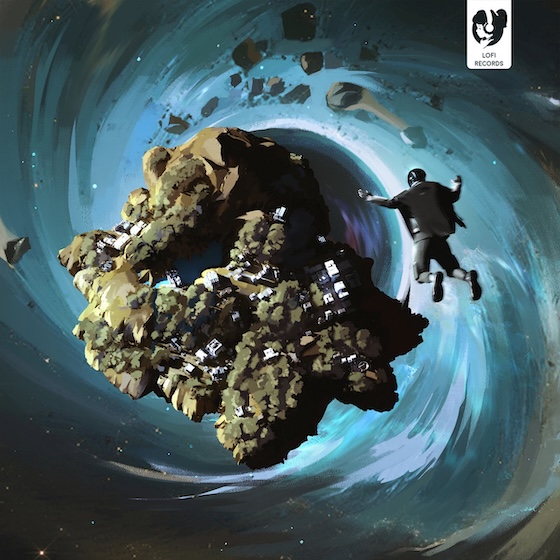
There’s something immediately different about Rebirth Island. Not louder. Not bigger. Just… fuller. More lived in. A lot of lofi records settle into a mood and never move beyond it, throwing a little neon glow over sleepy beats and calling it atmosphere. Le Metroid pushes further. Across nine richly textured tracks, the album folds synthwave into its DNA without losing the intimacy that makes lofi work in the first place.
And honestly, you can feel the geography of the record while it plays. Every track feels tied to a location, like you’re slowly wandering through some half-abandoned futuristic colony after dark. “Factory” kicks things open with this hazy industrial throb — muted drums under cold metallic synth lines, machinery humming somewhere beneath the floorboards. Then “Hills” changes the entire horizon. Suddenly the air feels warmer. Wider. The synths stretch out into these glowing melancholic melodies that never slip into passive background music. It’s one of the album’s best moments because it finally exhales instead of drifting in place.
That constant sense of motion is what keeps Rebirth Island from fading into the background. “Harbor” rolls in with these glistening aquatic textures that feel caught somewhere between vaporwave nostalgia and late-night downtempo electronica, while “Living Quarter” brings a surprising warmth to such a synth-driven project. It almost feels inhabited. Little things keep revealing themselves in the mix, too — distant melodies tucked behind the drums, softened percussion, tiny analog imperfections that give the whole album texture instead of polish.
Even the sequencing deserves credit. The transitions aren’t abrupt or playlist-clean; tracks melt into each other naturally, like moving between districts in the same neon-lit city. Nothing feels isolated. Nothing feels randomly placed. That’s the difference here. Rebirth Island doesn’t play like a collection of beats — it plays like a world unfolding piece by piece, one glowing corridor at a time.
What really makes the lofi/synthwave crossover land, though, is the restraint. Le Metroid never buries the album under retro gimmicks or nostalgia bait. No oversized outrun theatrics. No endless obsession with ‘80s cosplay aesthetics. The production stays controlled, patient, almost weightless at times. “Control Center” nails that balance perfectly — sharp, icy synth structures drifting over dusty lofi percussion that never tries too hard to dominate the mix. The track moves with purpose, but it never sprints.
Then comes “TV Station,” easily one of the most haunting moments on the record. Flickering melodies pulse through faded ambient textures like half-dead signals coming through an old broadcast tower after midnight. It’s quiet. Isolated. Weirdly emotional without announcing itself as emotional. And that’s the trick Rebirth Island keeps pulling off over and over again: instead of demanding attention, it slowly embeds itself in your head. Hours later, certain melodies are still lingering around like memories from a place that doesn’t actually exist.
That’s probably the biggest compliment you can give Rebirth Island: it lingers. Most lofi projects disappear the second they end. This one leaves residue. Tiny melodies come back hours later. Certain textures hang in your head. The album feels less interested in nostalgia than isolation — quiet futuristic spaces, empty corridors, artificial sunsets. For a lofi/synthwave hybrid, that’s a smart direction to take. Instead of chasing retro cool, Le Metroid made something immersive, weightless, and surprisingly emotional.
While we patiently await their next release, Rebirth Island can be picked up here or wherever the finest of electronic music is being served.