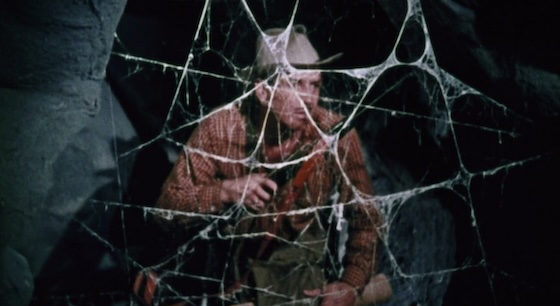
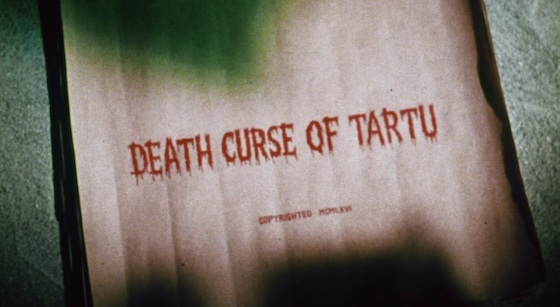
Death Curse of Tartu is the kind of regional horror oddity that feels like it was shot during a long weekend when the Everglades were in a bad mood. It opens with the promise of ancient curses and archaeological intrigue, but quickly settles into a rhythm that’s more meandering than menacing. The setup is classic drive‑in fodder: a group of student archaeologists tromps into the swamp looking for fossils, blissfully unaware that they’re about to desecrate the resting place of Tartu, a centuries‑dead witch doctor who apparently has nothing better to do than punish anyone who steps on his turf. It’s a premise with teeth, even if the film itself only occasionally remembers to bite.
The pacing is where the curse really kicks in. Scenes stretch out like sun‑baked taffy, with long walks through the marsh, long pauses between lines, and long stretches where you can practically hear the mosquitoes buzzing louder than the plot. But there’s a strange charm in that languor. The Everglades become a character—humid, hostile, and indifferent to the cast’s survival. When Tartu finally manifests, he does so by transforming into various animals, a concept that’s far more exciting on paper than in execution. Still, there’s something endearing about watching a low‑budget production commit so fully to its own mythology.
The performances are earnest in that unmistakable regional‑cinema way: everyone is trying, even when the script gives them little to work with. Fred Pinero and Babette Sherrill anchor the cast with a kind of wide‑eyed sincerity that almost sells the danger, even when the danger is clearly a borrowed alligator or a rubber snake. The film’s attempts at suspense often veer into unintentional comedy, but that’s part of its charm. You don’t watch Death Curse of Tartu for polished thrills—you watch it for the scrappy, handmade weirdness that only a 1960s Florida production can deliver.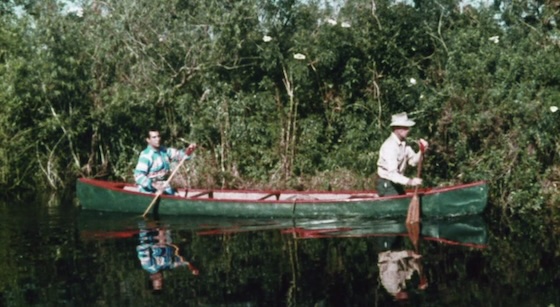
Where the film does shine is in its atmosphere. The swamp locations feel genuinely remote, the kind of place where a curse might plausibly linger just out of sight. The cinematography captures the Everglades’ eerie stillness, and the soundscape—however rough—adds to the sense of isolation. Even when the plot drags, the setting keeps you tethered, reminding you that nature itself is the real antagonist here, with Tartu merely acting as its cranky spokesperson.
By the time the film reaches its climax, you’re either fully on board with its slow‑burn, creature‑shuffle energy or you’ve succumbed to the curse of boredom. But for fans of regional horror, Death Curse of Tartu is a fascinating artifact: a film that embodies the DIY spirit of its era, flaws and all. It may not have the delirious spark of Sting of Death, but it has its own swamp‑soaked identity—patient, peculiar, and stubbornly alive. In the context of Arrow Video’s He Came From the Swamp set, it’s an essential companion piece, a reminder that even the duller corners of exploitation cinema have stories worth preserving.


Home Video Distributor: Arrow Films
Available on Blu-ray - November 24, 2020
Screen Formats: 1.85:1
Subtitles: English SDH
Video: 1080p
Audio: LPCM Mono
Discs: Blu-ray Disc; 4-disc set
Region Encoding: Region-free playback
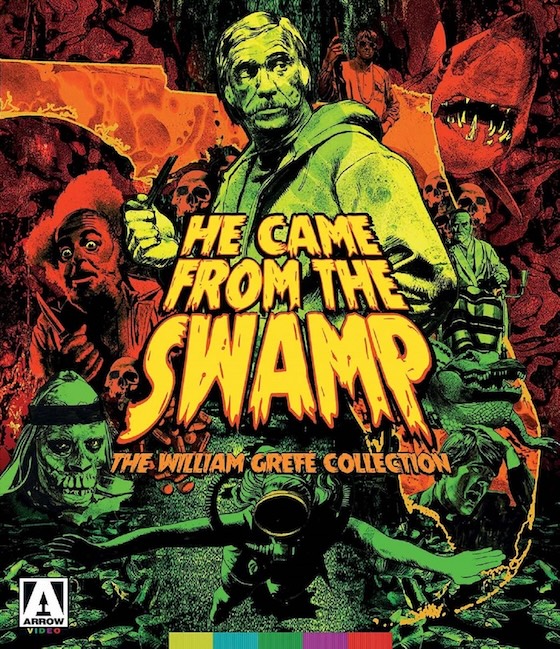
Killer sharks and human jellyfish and living mummies, oh my! Arrow Video is proud to present the first ever collection of works by William 'Wild Bill' Grefé, the maverick filmmaker who braved the deep, dark depths of the Florida everglades to deliver some of the most outrageous exploitation fare ever to go-go dance its way across drive-in screens. Bringing together seven of Grefé's most outlandish films, plus a feature length documentary on the filmmaker's career, He Came from the Swamp: The William Grefé Collection packs in a macabre menagerie of demented jellyfish men (Sting of Death), zombified witch doctors (Death Curse of Tartu), homicidal hippies (The Hooked Generation) and seductive matrons (The Naked Zoo) – not to mention the ubiquitous go-go dancing – to create one of the most wildly entertaining box-sets of all time!
Video
Arrow’s video upgrade gives Death Curse of Tartu a clarity it never had in its mosquito‑clouded youth, peeling back decades of murk to reveal a surprisingly textured Everglades landscape. The swamp’s tangled greens and browns finally separate instead of smearing into a single humid blur, and the day‑for‑night shots—once borderline incomprehensible—now carry a moody, usable darkness. Grain remains intact, preserving that unmistakable regional‑horror roughness, but the image breathes in a way it never could on battered TV prints. Even Tartu’s animal‑form attacks, however creaky, gain a strange new presence when you can actually see what’s happening.
It’s not a transformation that turns the film into a lost masterpiece, but it absolutely lets the movie’s atmosphere do the heavy lifting it was always meant to do.
Audio
Arrow’s audio upgrade for Death Curse of Tartu does exactly what you want for a film that’s always sounded like it was recorded through a damp sock in the middle of a mosquito swarm—it cleans things up without sanding off the regional grit. Dialogue, once muffled under layers of swamp echo, now sits more clearly in the mix, making the cast’s earnest line readings easier to appreciate.
The ambient Everglades noise—wind, water, insects—comes through with a more natural presence, giving the film a stronger sense of place without overwhelming the track. Even Tartu’s animal‑form attacks gain a bit more punch, their snarls and hisses no longer dissolving into static. It’s still a rough, low‑budget mono track at heart, but Arrow’s polish turns that roughness into texture rather than distraction, letting the film’s atmosphere breathe while preserving every bit of its scrappy, regional charm.
Supplements:
Arrow packs the disc with the kind of special features that feel like they were dredged straight from the Everglades, cleaned off just enough to be watchable, and then handed to you with a wink. You get a lively, affectionate documentary that digs into William Grefé’s wild career, complete with stories of shooting in alligator‑infested waters and wrangling actors who were only mostly sure what they’d signed up for.
There are interviews with cast and crew who recall the production with equal parts pride and disbelief, plus archival materials that showcase the film’s original marketing—posters, lobby cards, and trailers that promise far more danger than the budget could ever deliver.
Add in a commentary track that feels like sitting on a porch with a filmmaker who’s seen some things, a handful of featurettes exploring Florida’s regional filmmaking scene, and a restoration comparison that proves just how much swamp‑gunk Arrow scraped away. It’s a treasure trove of weirdness, history, and pure cult‑cinema charm.
Commentary:
- See Special Features.
Special Features:
Disc One: STING OF DEATH (1966) + DEATH CURSE OF TARTU (1966)
- Brand new introductions to the films by director William Grefé
- Archival audio commentaries for both films with William Grefé and filmmaker Frank Henenlotter
- Sting of Death: Beyond the Movie Monsters a-Go Go! a look into the history of rock 'n' roll monster movies with author/historian C. Courtney Joyner
- The Curious Case of Dr. Traboh: Spook Show Extraordinaire a ghoulish look into the early spook show days with monster maker Doug Hobart
- Original Trailers
- Still and Promotion Gallery

| Movie |  |
|
| Video |  |
|
| Audio | |
|
| Extras | |
|
|
Composite Blu-ray Grade
|
||