Crate diggers, unite.
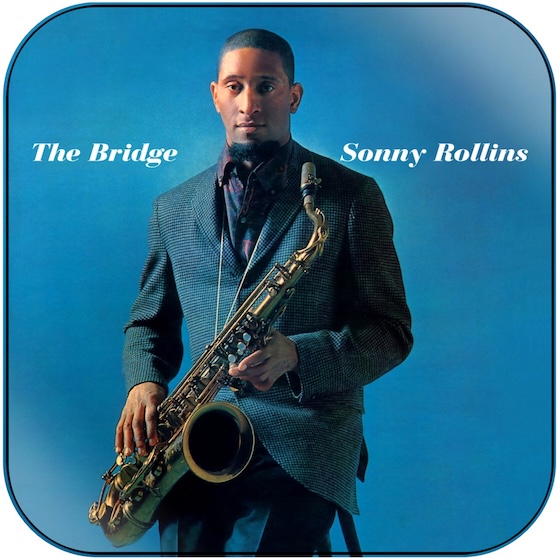
Here’s how Deadwax Noir opens—no grand overture, no fireworks. Just a figure slipping back into frame. Sonny Rollins disappears for three years at the tail end of the ’50s—walks away at his peak—and when he comes back, it’s not with a statement. It’s with a mood.
Rumor has him up on the Williamsburg Bridge, practicing into open air, days and nights, shaping his sound against steel and wind. You hear that space all over The Bridge. Not metaphorically. Literally.
There’s air in this record.
And the setup is bare. No piano. That’s the first thing you notice. Or maybe the first thing you don’t notice, which is the point. Jim Hall’s guitar fills that void, but not in the way you expect—he’s not there to thicken things up. He’s there to outline them. Light touches. Half-shadows. Bob Cranshaw and Ben Riley keep it moving, but gently, like they’re aware of how much silence matters here. Everyone’s giving each other space. No one rushes to fill it.
“Without a Song” opens like a long take. Rollins stretches the melody until it almost falls apart, then pulls it back together in real time. He’s not showing off—he’s editing on the fly. Cutting phrases short. Letting others linger. It feels less like a performance and more like watching someone think out loud. “Where Are You?” plays quieter, almost internal, like a voice you weren’t meant to overhear. Then “John S.” shifts the energy just enough—there’s swing, sure, but it’s controlled. Held back. Like a chase scene shot from across the street instead of right in your face.
Then the title track hits.
“The Bridge” is the center of gravity here. Everything clicks into place. The interplay between Rollins and Hall becomes the whole story—back and forth, but subtle, like dialogue you catch in fragments. Rollins pushes forward, Hall answers in these cool, clipped lines that never overstay. The choruses rise and fall with this quiet momentum, almost architectural. You can feel structure in it. Not rigid, but present. It’s not flashy. It’s designed. And yeah, you can hear the bridge in it—not as a gimmick, but as a rhythm, a sense of movement overhead. Steel and repetition. It lingers.
“God Bless the Child” pulls everything down to a near standstill. Rollins takes his time with it. No rush to get anywhere. He leans into the melody without dressing it up too much, which makes it land harder. It’s not sentimental—it’s careful. Like he knows exactly how much weight it can carry.
Then you get “You Do Something To Me,” which just… drifts. Bossa nova pulse underneath, but it’s loose, almost secondary. Rollins wanders through it, circles ideas, and doubles back. It feels like a walk more than a statement. No destination, just movement.
By The Bridge’s conclusion, the frame has opened up completely—wide, expansive improvisation—but Rollins never overwhelms it. He still leaves room. That’s the thing. Even at his most dominant, he’s not suffocating the space.
People call this record “mellow,” which… sure, on the surface. But that undersells what’s happening. This isn’t Rollins cooling off. This is him refining everything. Stripping it down. His tone has weight, but he’s not forcing it. The phrasing is surgical—cut, pause, breathe. There’s a film logic to it. Ideas come back, but slightly altered. Different angle. Different light. Nothing feels wasted.
And historically, yeah, it lands heavy. First record after the hiatus. 1962. Could’ve been a victory lap. It isn’t. He doesn’t sound like he’s trying to reclaim anything. If anything, he sounds like he left, figured something out, and came back uninterested in repeating the old version of himself. The classics are here—standards, familiar forms—but they’re bent, reframed, seen from a different corner of the room.
The Bridge doesn’t play like a comeback. It plays like a late-night screening. Grainy. Deliberate. A little distant. You’re not told what to feel. The Groove drops you into it and leaves you to follow the movement: the sound of a man who stepped away from the spotlight and learned how to see in the dark.
Drop the needle and stay there.