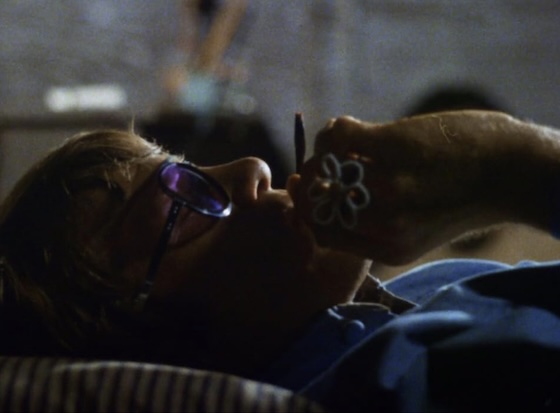
There’s a particular kind of cinematic filth that doesn’t come from gore or shock, but from texture—from the feeling that everything on screen is coated in a thin film of sweat, nicotine, and bad intent. The Hooked Generation lives in that layer. It doesn’t rise above it, doesn’t stylize it, doesn’t even seem aware of it. It just is.
You don’t ease into this movie. It drops you straight into a world where money is already stolen, tempers are already short, and everyone already looks like they haven’t slept in three days. The air feels heavy. Not metaphorically—physically. Like the camera lens itself is fogging up from Florida heat while William Grefé just keeps rolling because stopping would require a plan.
The sludge comes from accumulation. Little things. The way conversations don’t flow so much as collide. The way people hover too close to each other, voices rising, eyes darting, nobody quite in control of their own thoughts. You can practically smell the interiors—cheap rooms, stale air, something chemical lingering in the background. It’s not staged grime; it’s ambient rot.
And the money—always the money—never feels like a prize. It’s damp, cursed, already decaying the people holding it. Nobody celebrates it cleanly. Every interaction around it is anxious, aggressive, paranoid. You get the sense that if you touched those bills your hands would come away sticky, like you grabbed something alive that didn’t want to be held.
The film moves like a body overheating. It lurches, stalls, then snaps forward into bursts of shouting, panic, or sudden ugliness. There’s no rhythm you can settle into. Just a constant low-grade irritation that builds until somebody explodes, and even that release doesn’t clear the air—it just makes everything thicker. The aftermath of every scene feels heavier than the scene itself.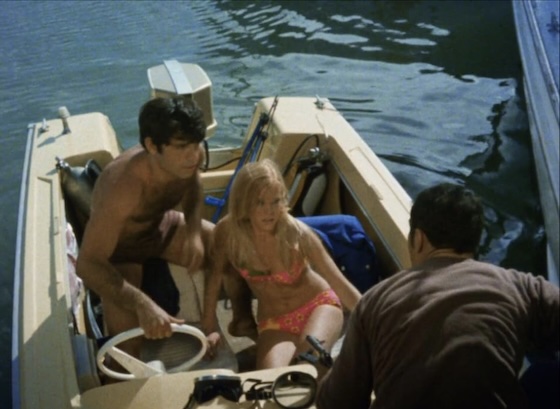
What really sinks it into the muck is how little distance there is between the camera and the people. No polish, no cushioning. Faces get too close. Emotions spill over without shape. It feels less like watching characters and more like being stuck in a room where something has already gone wrong and is continuing to go wrong in slow, sweaty increments. You’re not observing decay—you’re sitting in it.
Even the counterculture angle doesn’t have any lift to it. No psychedelic escape, no dreamy detachment. Just jittery, sour energy. Whatever highs are supposed to be happening translate as agitation, suspicion, collapse. The film wants to warn you about drugs, sure, but it can’t stop wallowing in the same mess it’s condemning. That contradiction is part of the sludge too—moralizing while knee-deep in the muck.
By the time it winds down, nothing has been purified or resolved. Everything just feels used up. Like the movie itself is exhausted, coated in the same residue as the people inside it. It doesn’t leave you shocked or enlightened—it leaves you dirty. Not in a fun exploitation way, but in that lingering, hard-to-wash-off sense that you’ve been sitting somewhere you shouldn’t have stayed this long.
It’s not a movie you admire. It’s one you endure, maybe even appreciate afterward the way you appreciate surviving a place that smelled wrong from the moment you walked in.

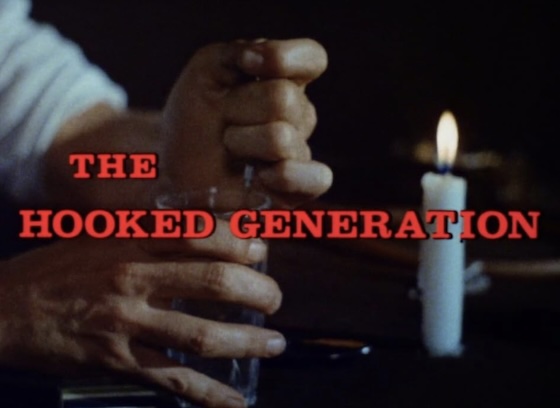

Home Video Distributor: Arrow Films
Available on Blu-ray - November 24, 2020
Screen Formats: 1.85:1
Subtitles: English SDH
Video: 1080p
Audio: LPCM Mono
Discs: Blu-ray Disc; 4-disc set
Region Encoding: Region-free playback
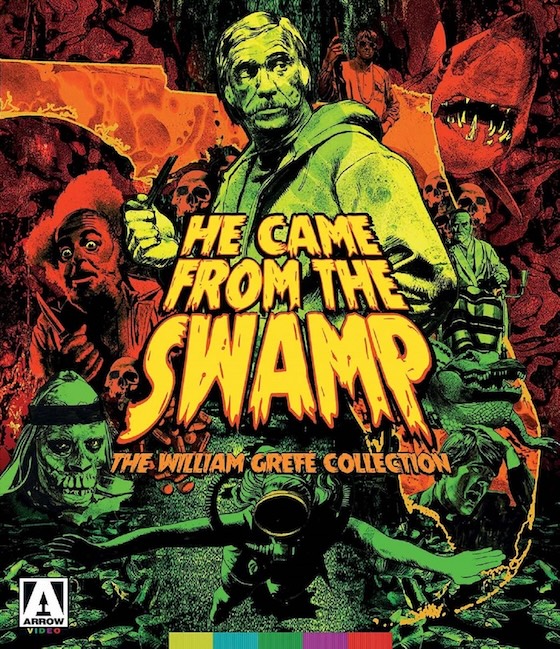
Killer sharks and human jellyfish and living mummies, oh my! Arrow Video is proud to present the first ever collection of works by William 'Wild Bill' Grefé, the maverick filmmaker who braved the deep, dark depths of the Florida everglades to deliver some of the most outrageous exploitation fare ever to go-go dance its way across drive-in screens. Bringing together seven of Grefé's most outlandish films, plus a feature length documentary on the filmmaker's career, He Came from the Swamp: The William Grefé Collection packs in a macabre menagerie of demented jellyfish men (Sting of Death), zombified witch doctors (Death Curse of Tartu), homicidal hippies (The Hooked Generation) and seductive matrons (The Naked Zoo) – not to mention the ubiquitous go-go dancing – to create one of the most wildly entertaining box-sets of all time!
Video
There’s something perversely satisfying about seeing The Hooked Generation get the HD treatment, because instead of “cleaning it up,” the restoration just sharpens the grime into high definition—like wiping fog off a window only to realize the dirt was on the inside the whole time.
The colors don’t pop so much as simmer, sickly greens and nicotine yellows hanging in the air, while faces come into focus with every pore, every bead of sweat, every twitch of irritation intact. The image is clearer, sure, but that clarity makes the film feel even more claustrophobic, like you’re no longer watching a murky relic—you’re standing in the room with them, heat pressing in, money sticking to your fingers.
It’s the rare glow-up that doesn’t elevate the material so much as expose it, turning what used to be hazy exploitation into something uncomfortably immediate, where the texture—the real draw all along—finally gets to crawl under your skin in full resolution.
Audio
The audio upgrade hits the same way—less a polish job, more like someone dragged the whole soundtrack out of the mud and hosed it off just enough to reveal how grimy it always was. On The Hooked Generation, the dialogue doesn’t suddenly become clean or theatrical; it becomes present. Voices sit closer, harsher, with that brittle edge of people talking over each other, snapping mid-sentence, letting words bleed into noise.
Background sounds creep forward too—the hum of bad air, the hollow echo of cheap rooms, little textures that used to blur together now separating just enough to make the space feel tighter, more suffocating. Even the music cues feel less like score and more like something leaking in from the walls.
It’s not pristine, and it shouldn’t be—the upgrade just strips away the distance, so instead of hearing a worn-out track, you’re stuck inside it, every shout and awkward silence pressing right up against your ear.
Supplements:
Arrow packs the disc with the kind of special features that feel like they were dredged straight from the Everglades, cleaned off just enough to be watchable, and then handed to you with a wink. You get a lively, affectionate documentary that digs into William Grefé’s wild career, complete with stories of shooting in alligator‑infested waters and wrangling actors who were only mostly sure what they’d signed up for.
There are interviews with cast and crew who recall the production with equal parts pride and disbelief, plus archival materials that showcase the film’s original marketing—posters, lobby cards, and trailers that promise far more danger than the budget could ever deliver.
Add in a commentary track that feels like sitting on a porch with a filmmaker who’s seen some things, a handful of featurettes exploring Florida’s regional filmmaking scene, and a restoration comparison that proves just how much swamp‑gunk Arrow scraped away. It’s a treasure trove of weirdness, history, and pure cult‑cinema charm.
Commentary:
- See Special Features.
Special Features:
Disc Two: THE HOOKED GENERATION (1968) + THE PSYCHEDELIC PRIEST (1971)
- Introductions to both films by William Grefé
- Archival audio commentaries for both films with William Grefé and Frank Henenlotter
- Beyond the Movie: That’s Drugsploitation! — a look at the counterculture films that inspired The Hooked Generation, with author/film historian Chris Poggiali
- Beyond the Movie: The Ultimate Road Trip — the story behind The Psychedelic Priest, with Chris Poggiali
- The Hooked Generation behind-the-scenes footage
- The Hooked Generation still gallery

| Movie |  |
|
| Video |  |
|
| Audio | |
|
| Extras | |
|
|
Composite Blu-ray Grade
|
||