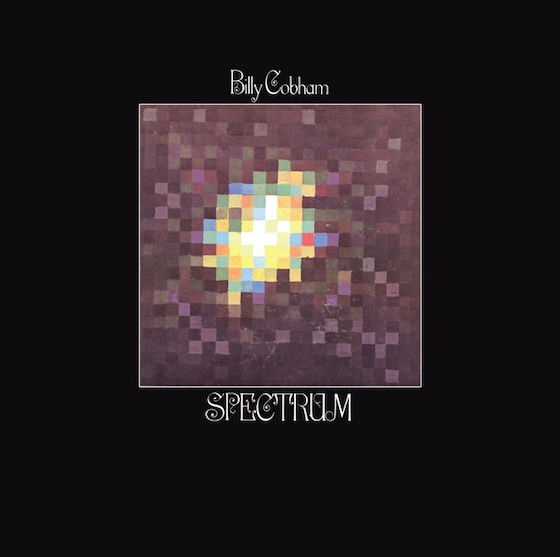
Billy Cobham’s Spectrum hit in 1973 like a blown fuse in the middle of polite jazz fusion. By then, Cobham already had serious credentials: a Panamanian-born drummer raised in Brooklyn, veteran of Horace Silver’s band, and, most famously, rhythmic engine room for the original Mahavishnu Orchestra. But Spectrum offered him something different: a whole lot of space with which to groove, to flex, to build an album without sanding down any of the edges.
The thing is, Spectrum still sweats.
The lineup? You have Tommy Bolin — years before Deep Purple — who absolutely scorches this record with a guitar tone that sounds half liquid fire, half alleyway knife fight. Jan Hammer’s keyboards wobble, stab, and spiral everywhere at once, while Lee Sklar holds the low end together with absurd restraint considering the chaos around him. The chemistry is immediate.
“Quadrant 4” opens the album like a car chase through a collapsing planet, Cobham attacks the drum kit with terrifying momentum while Bolin tears through riffs that feel closer to heavy psych than orthodox jazz. Then “Searching for the Right Door” pivots into something murkier and more hypnotic, fusion as late-night paranoia rather than athletic spectacle. Cobham doesn’t merely keep time here — he bends the emotional temperature of the room.
What separates Spectrum from a lot of early-’70s fusion is its refusal to become clinical. “Stratus,” the album’s centerpiece, rides one of the nastiest grooves in jazz history, all tension and release, with Hammer floating electric piano lines over Sklar’s swamp-thick bass figure. It’s been sampled, borrowed, and outright cannibalized for decades because the rhythm section locks into something primal.
Meanwhile, “Taurian Matador” swings harder than people remember, Cobham threading impossible fills through a track that somehow still breathes naturally. Even at its most technically absurd, the album keeps reaching for body movement rather than intellectual applause. That distinction matters. Plenty of fusion records impress you; Spectrum drags you into the passenger seat and floors the accelerator.
More than fifty years later, Spectrum still feels dangerous in a way many canonized jazz records no longer do. Maybe that’s because Cobham approached fusion less like a conservatory exercise and more like controlled demolition. There’s funk in it, metal before metal fully existed, cosmic jazz, street-corner grit, and enough rhythmic invention to keep drum nerds busy for a lifetime.
That’s the magic of Spectrum: not perfection, but combustion. You can still track down this essential slab of fusion anywhere the deepest grooves and dirtiest rhythms are traded.
Drop the needle. Stay there.